Rjukan lies deep inside Vestfjorddalen, squeezed into a narrow strip of land between steep mountain walls. For several months of the year the sun does not reach the town at all. That absence of winter sunlight became part of Rjukan’s identity, and more than a century ago people were already discussing how to bring the sun back down into the valley.
In 1928, Krossobanen was built to carry residents up out of the shadow and into the winter sun. The older idea of reflecting sunlight into town eventually became possible as well: in 2013, three computer-controlled mirrors were installed high on the mountainside. They follow the sun and throw a bright pool of light onto the town square.
A town built by water and electricity
Rjukan exists because of water and electricity. At the beginning of the twentieth century, Sam Eyde and Norsk Hydro began harnessing the immense hydropower of the waterfalls above the valley. That electricity made large-scale fertilizer production possible and transformed a narrow mountain valley into one of Norway’s most important industrial landscapes.
Power stations, factories, workers’ housing, railways and ferries were built as parts of the same system. The town was not simply a place that later acquired industry; much of Rjukan was created because the industry needed a town around it. Today the Rjukan–Notodden industrial landscape is recognised by UNESCO, and the scale of that history is still visible in the valley.
Vemork and the heavy-water story
At Vemork, Norsk Hydro produced heavy water. During the German occupation, Allied forces feared that the material could contribute to German nuclear research. A series of operations was launched to prevent it from reaching Germany. The best known was Operation Gunnerside in February 1943, when Norwegian saboteurs crossed the mountains and destroyed the heavy-water production equipment at Vemork.
Vemork is now part of the Norwegian Industrial Workers Museum. The original heavy-water cellar has been excavated and incorporated into the museum, and the Saboteur’s Trail follows the route toward the plant. The story works best when you see the geography around it: rock, forest, steep slopes and the industrial buildings all in the same frame.
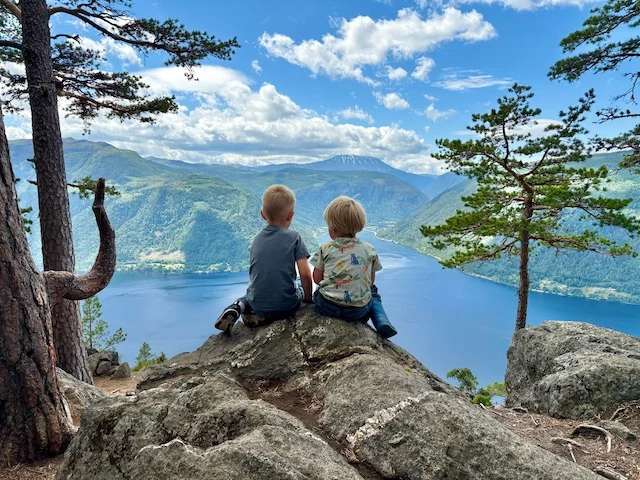
The story continues at Tinnsjø
When the Germans later decided to move the remaining heavy water and equipment out of Norway, the cargo was sent by rail toward Tinnsjø. On 20 February 1944, railway ferry D/F Hydro left Mæl carrying railway wagons with heavy water and industrial equipment.
Norwegian resistance fighters had placed explosives below deck. The charge detonated during the crossing and the ferry sank in one of the deepest parts of Tinnsjø. Eighteen people died: Norwegian civilians as well as German soldiers. The operation prevented the shipment from continuing, but at a terrible human cost.
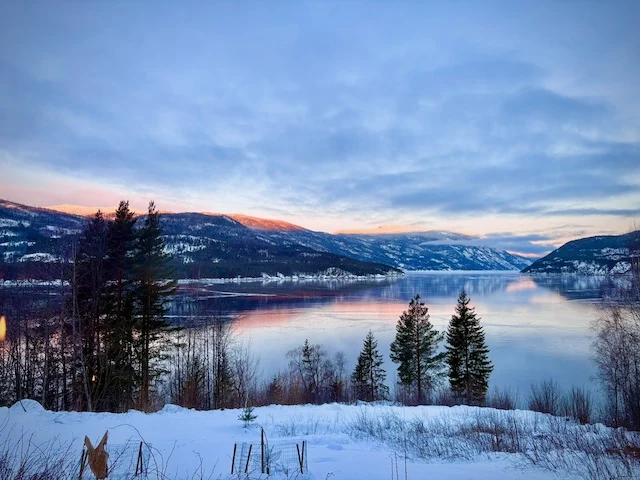
In winter, Tinnsjø can look almost black beneath the mountains, with snow lying low along the shore and the opposite side disappearing into blue-grey light. There is little in the landscape to announce what happened here. That contrast is part of what makes the place so affecting: the history unfolded on this ordinary-looking stretch of cold mountain water.
A day in Rjukan
Rjukan is worth more than a single museum stop. Walk through the centre and look up at the sun mirrors. Take Krossobanen above the valley. Visit Vemork when you want the larger industrial and wartime story, then follow the landscape down toward Mæl and Tinnsjø. The waterfalls explain the industry, the industry explains the town, and the railway and ferries explain why the lake became part of the wartime story.